
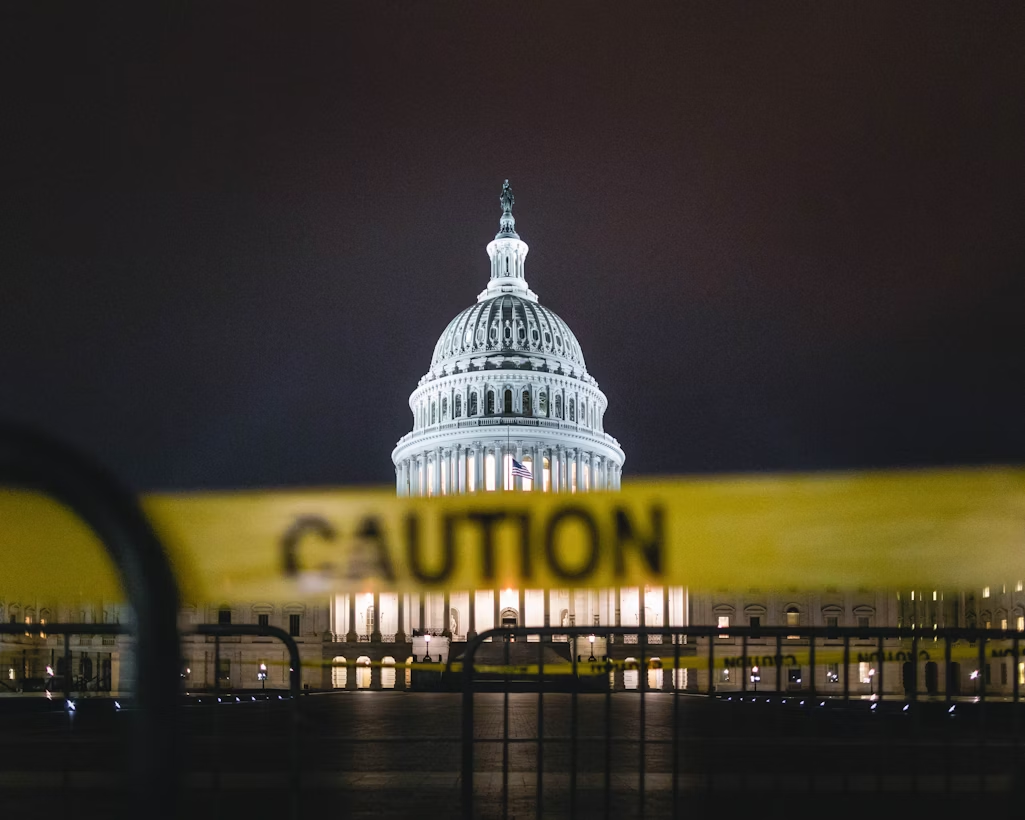
The United States government officially reopened on November 13th after President Donald Trump signed legislation ending the longest federal shutdown in American history at 43 days, surpassing the previous 34-day record from 2018-2019. This impasse cost the economy an estimated $15 billion per week, according to the White House's National Economic Council, totalling $92 billion in estimated economic damage, with the Congressional Budget Office estimating that roughly $11 billion of that loss will be permanent. Historically, government shutdowns have had minimal negative impact on stock markets, with the S&P 500 gaining an average of 4.4% in the periods following budget resolutions, and after the 2019 shutdown, markets spiked 36% during the subsequent year. However, this shutdown's length delayed $50 billion in federal spending, forced 1.4 million workers to go without pay, and created a data "fog" that left the Federal Reserve operating blind on crucial economic indicators. Earlier in July, Congress had raised the debt ceiling by $5 trillion, from $36.1 trillion to $41.1 trillion, as part of the "One Big Beautiful Bill Act", the largest extension in U.S. history. Meanwhile, interest payments on the national debt have reached approximately 3.1% of GDP in fiscal year 2025, totalling $970 billion, with projections showing this burden rising to 5.4% of GDP by 2055 as the debt-to-GDP ratio climbs toward 125%.
The day after the shutdown ended, markets went through their worst sell-off in over a month. This sharp correction defied the historical pattern of post-shutdown market rallies and constituted a classic "buy the rumour, sell the news" scenario. Investors are more likely reacting negatively to concerns that the Federal Reserve is slowing its pace of interest rate cuts, as the 10-year Treasury yield rose to 4.12%. Technology stocks bore the brunt of the selling pressure, with Nvidia falling 3.6%, Tesla dropping 7%, and cryptocurrency-related stocks like Coinbase and Robinhood declining 6.9% and 9%, respectively, as Bitcoin failed to defend the $100,000 line. The selloff could also speak to the thesis of an AI bubble, with valuations trading 45% above the forward multiple of the rest of the market. Furthermore, the funding deal only extends through January 30, 2026, setting up another shutdown battle in just 11 weeks if Congress fails to address the contentious health subsidy issue that triggered the initial impasse.
The current standoff shows two parties locked into increasingly costly brinkmanship even though temporary relief is provided by the five trillion dollar debt ceiling increase, and the upcoming January 30 funding deadline is likely to resurface the same conflict with even weaker incentives for compromise as each round inflicts heavier economic damage and produces shrinking political gains now that the public distributes blame almost evenly. Markets sold off even after the shutdown was resolved because investors are focusing on three converging risks: interest payments already consuming 3.1% of GDP and moving toward unsustainable levels that constrain the Federal Reserve's ability to maintain both price stability and debt sustainability. What the rapid debt ceiling hike without structural reforms signals to bond markets is that fiscal discipline has eroded and may lead to a gradual rise in the US sovereign risk premium over the next year and a half, and repeated shutdown threats creating persistent volatility that could weigh on equity valuations through at least the second quarter of 2026 or further. Forecasts point to wilder market turbulence into January 2026 with a roughly 65% chance of another funding crisis, a ten-year Treasury yield testing 4.5% by March 2026, and a rotation away from expensive technology stocks toward value sectors as rising debt service costs limit future growth-orientated public investment. While the most constructive policy path would be to involve a credible long-term fiscal consolidation plan, the pattern of current negotiations suggests continued short-term extensions, rising debt burdens, and gradually higher borrowing costs until an outside shock forces structural reform, likely when interest payments surpass 4% of GDP sometime around 2028 or 2029.
Sources: Reuters, CNBC, CBS
Photos: Unsplash