
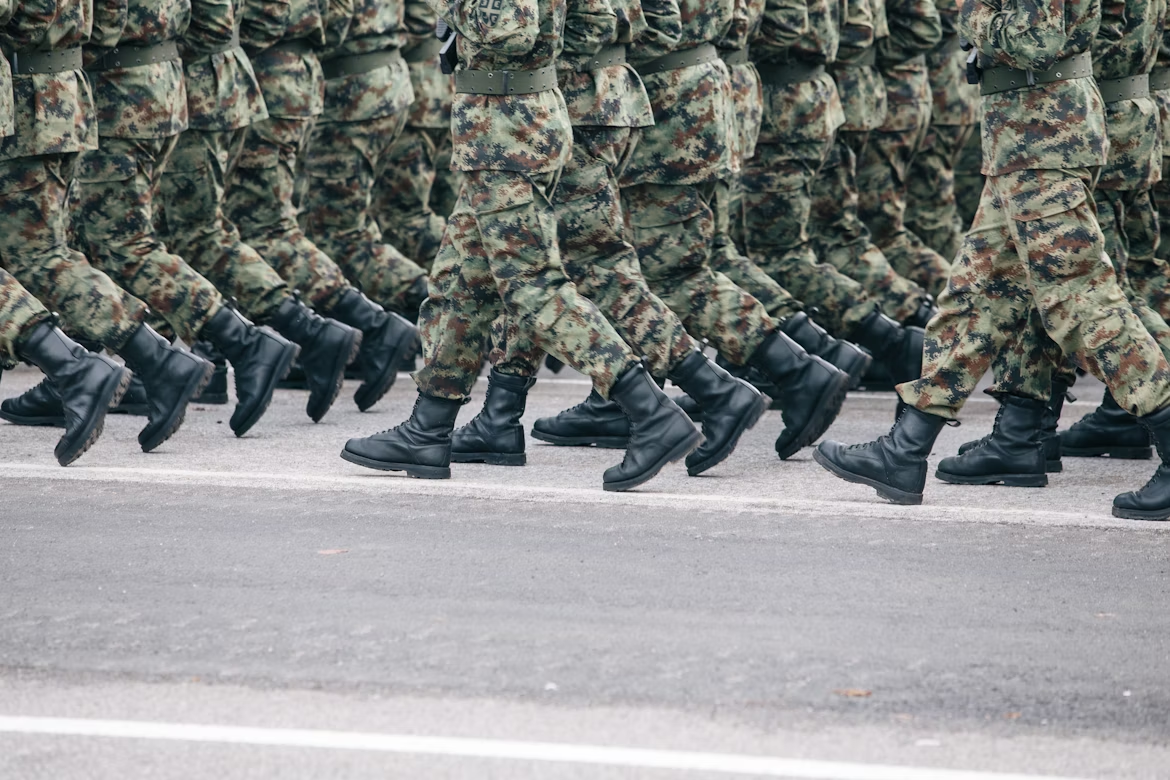
Germany’s push to build Europe’s strongest conventional army has been one of the most radical strategic shifts in its modern history, yet the plan is colliding with economic and technological realities. Chancellor Friedrich Merz’s goal of expanding the Bundeswehr to 260,000 troops and driving defence spending toward €152 billion by 2029 arrives as the German economy flatlines and public support wavers. Military outlays provide weak stimulus, with economists warning that every euro spent on defence generates only half a euro in additional economic activity, far below the returns from infrastructure or education. Growing demand, limited production capacity, and rising defence-sector profits further highlight the gap between political ambition and economic payoff.
At the same time, Germany’s rearmament blueprint risks being overtaken by the ever-changing landscape of modern warfare. The Ukraine conflict has demonstrated that inexpensive, mass-produced drones, electronic warfare, and asymmetric tactics now dominate battlefields, rendering traditional heavy-armour strategies far less decisive. Yet Berlin’s plans remain rooted in conventional force expansion, with troop increases and large platforms outpacing investment in drones, counter-UAS systems, and cyber capabilities. It's a precarious situation where Germany is preparing for industrial warfare while the rest of the world is shifting toward swarms, autonomy, and low-cost precision.
The biggest wildcard is diplomacy. Ongoing US-led peace negotiations for Ukraine could rapidly cool the sense of urgency underpinning Germany’s trillion-euro build-up. If a settlement stabilises Eastern Europe, public resistance to higher defence spending, conscription debates, and welfare trade-offs will intensify. If talks collapse, Germany may find itself racing to modernise in a far more volatile environment. The most likely outcome lies in the middle, with partial rearmament, slower troop growth, defence spending capped near 3% to 3.5% of GDP, and a gradual pivot toward drones and cyber tools rather than tanks and manpower. Germany’s new posture will be more militarised than before but far short of the sweeping Zeitenwende envisioned, shaped not by grand strategy but by economic limits, political restraint, and rapidly changing warfare.
Sources: DW, CNN, Politico
Photos: Unsplash