
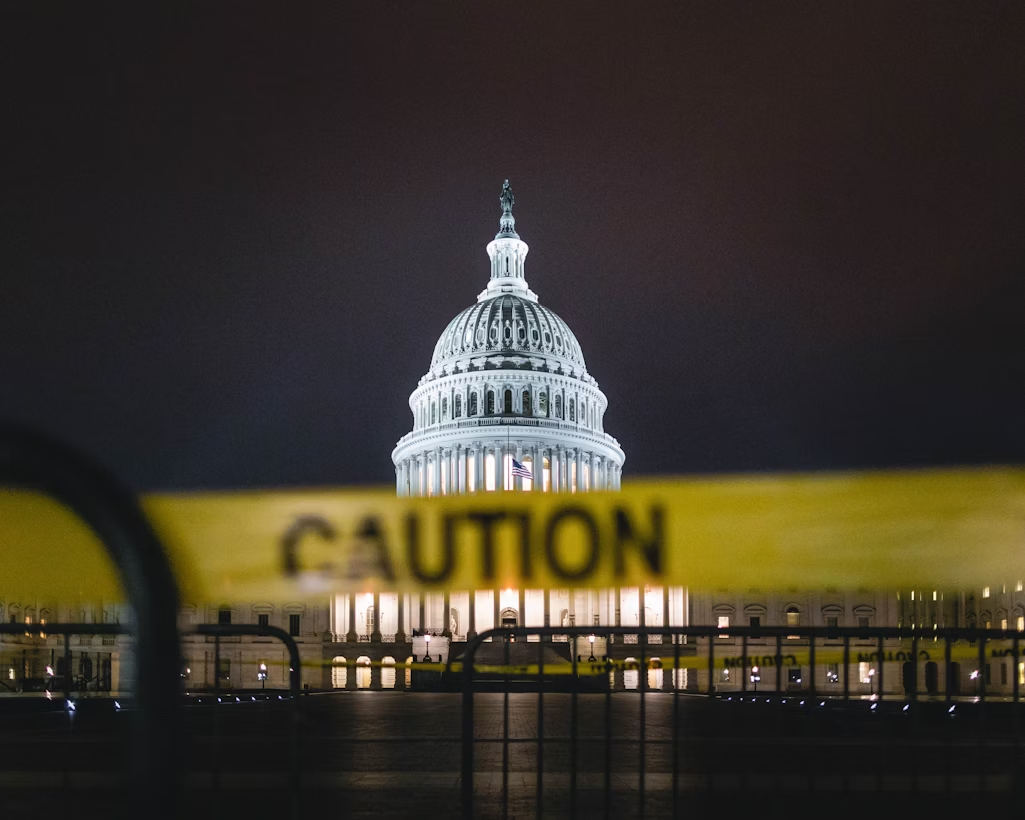
The United States stands at a precipice as the government shutdown, lasting more than a month and the longest in American history, compounds existing unemployment challenges into a cascade of crises that threatens the fabric of civil society. With approximately 900,000 federal workers furloughed and an additional 2 million working without pay, the unemployment rate has climbed to an estimated 4.4% in October, but this figure masks a far more dangerous reality of the simultaneous erosion of critical government functions that keep society operational. The suspension of SNAP (food stamp) benefits, initially halted entirely before court orders forced partial payments at 65% of normal levels, has left millions of Americans suddenly unable to afford food. Meanwhile, 13,000 air traffic controllers and 50,000 TSA agents work without pay, leading the FAA to order unprecedented 10% flight reductions across 40 major airports—not for efficiency, but because exhausted, unpaid workers are calling in sick or quitting. Perhaps most alarmingly, cyberattacks against federal systems have surged 85% since the shutdown began, with the lapse in CISA's information-sharing protections leaving both government and private sector networks vulnerable at a time when 44 states have already reported cybersecurity incidents.
This convergence of crises reveals a non-linear escalation pathway toward social instability. The key variables include: (1) Social cohesion decay rate – measured by the velocity at which middle and working-class households exhaust emergency savings (currently averaging 3-4 weeks for the 42 million Americans reliant on SNAP); (2) Critical infrastructure stress thresholds – the point at which air traffic control, cybersecurity defenses, and public safety systems fail catastrophically rather than degrade gradually; (3) Trust erosion coefficients – the exponential loss of public confidence in institutions when basic services like food assistance and airport security visibly collapse; and (4) Feedback loop acceleration – where unpaid federal workers themselves become unemployment statistics, further straining state systems already reporting unprecedented spikes in claims. The mathematical reality is blatant: when food insecurity intersects with paralysis in transportation and cybersecurity, the United States enters what complexity theorists call a "cascading failure regime". Historical precedents from Argentina's 2001 crisis and Greece's 2010-2015 collapse show that societies don't gradually decline; they reach tipping points where multiple system failures synchronise and rapid destabilisation is actualised. The model suggests we are approximately 2-3 weeks from that threshold, where grocery store panic buying (already emerging in communities hit hardest by SNAP disruptions), airport closures from controller shortages, and a major cyber breach of critical infrastructure could coincide.
If the shutdown continues without resolution, it could bring about three catastrophic scenarios with increasing probability: (Scenario A: Economic Death Spiral) – By December 2025, the combination of unpaid workers defaulting on mortgages, SNAP recipients unable to afford food, and businesses near airports losing revenue creates a self-reinforcing recession that pushes unemployment above 7%, triggering bank stress and credit freezes reminiscent of 2008. (Scenario B: Infrastructure Breakdown) – A major aviation disaster or cybersecurity breach occurs within 30-45 days as overworked, unpaid critical personnel make fatal errors; the subsequent public panic and loss of confidence in government protection capabilities lead to widespread civil unrest and possible martial law declarations. (Scenario C: Social Fragmentation) – Communities fracture along economic and political lines as local governments, unable to rely on federal support, implement radically outlandish survival strategies; food riots emerge in major cities; state governors mobilise National Guard units; and the United States effectively becomes a confederation of quasi-independent regions rather than a unified nation. The most troubling insight from the model is that these scenarios are not mutually exclusive. They could cascade into one another, creating what systems analysts term a "polycrisis", where each problem amplifies the others. The path forward requires immediate congressional action, but the window is narrowing: every day the shutdown continues reduces the probability of managed recovery and increases the likelihood of collapse that cannot be easily reversed. America is approaching a cliff edge where 38 days of dysfunction could trigger decades of dysfunction, transforming the world's most powerful nation into a cautionary tale of how quickly stability can evaporate when political paralysis meets systemic crisis.
Sources: CNBC, Reuters
Photos: Unsplash