
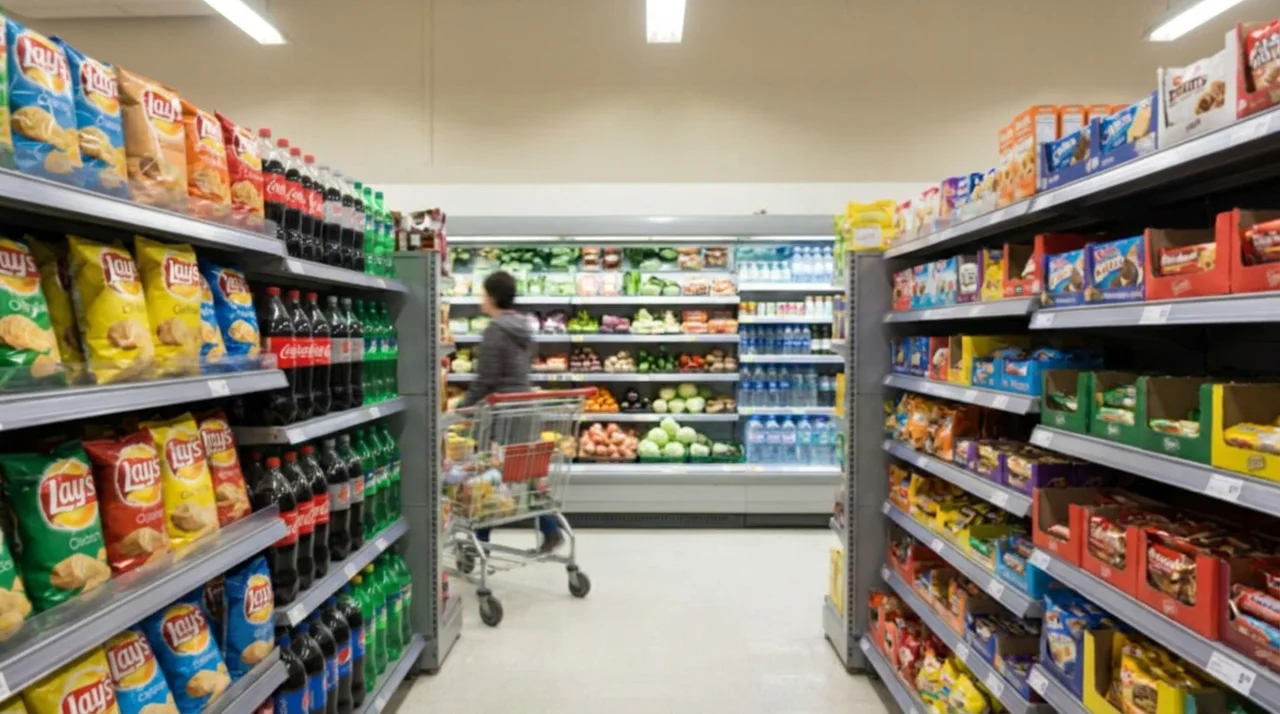
PepsiCo enters its next earnings report with a strong balance sheet and a shrinking snack business in North America. Revenue grew in the first and second quarters, the company held its full-year targets, and it raised its dividend for the 54th consecutive year. Frito-Lay North America's second-quarter revenue fell 2%, and snack volumes continue to decline after 2025 brought the division's first annual revenue drop since 2008. The decline began as an inflation problem and is now tied to GLP-1 drugs and changing eating habits. International growth is far from offsetting it, and the report will show whether higher-priced products can replace the lost volume before the snack business shrinks further.
CEO Ramon Laguarta calls GLP-1 drugs "more opportunity than threat," and PepsiCo's response has four parts: portion control (over 70% of U.S. food sales are single-serve packs), protein (Doritos Protein, Propel Clear Protein, Muscle Milk), fiber and gut health (Quaker, SunChips Fiber, newly acquired Poppi for $1.95 billion), and hydration (Propel is growing over 20%). Competitors are moving faster. Coca-Cola leads protein drinks with Fairlife and Core Power, and General Mills, Mondelez, Kraft Heinz and Nestlé have launched or bought protein products with more protein per serving than a 10-gram Dorito. PepsiCo matches them in the range of products it offers, but it must show that its snack scale can produce protein leadership, since no single new line is large enough to offset falling sales of salty snacks.
About one in nine Americans takes GLP-1 drugs. Users eat roughly a fifth fewer calories and spend nearly a third less on groceries, which could cost the food and beverage industry $30 billion to $55 billion a year by 2030. Spending is moving toward protein, fiber, hydration, and digestive support, so if salty snacks decline faster than the new lines grow, PepsiCo's revenue falls even as those lines succeed. Brand identity adds a second problem. Frito-Lay built its business on indulgence, and a protein Dorito asks shoppers to justify a treat, while Fairlife and Boost sell nutrition and need no justification. PepsiCo's distribution reach is its main advantage in this fight, but if shoppers see it as a snack company that added protein rather than a health product, that reach will support a business the market no longer wants to pay a premium for.